Saturday, January 3, 2015

Day 9: January 2 ... Seville by night is pure magic

I will add observations later ... but this Friday evening was magic!

One item of note for now.  The Giralda is the bell tower of Seville's Cathedral.  It was originally built as a minaret during the Moorish period, with a Renaissance style top subsequently added by the Spaniards. The Giralda was registered in 1987 as a World Heritage Site by UNESCO. The tower is 104 metres in height and remains one of the most important symbols of the city, as it has been since medieval times.  The illuminated Giralda appears in several of the photos below as well as in photos from the rooftop terrace of my apartment here (see previous blog).

Also, note the ubiquitous orange trees ... full of fruit.


click on photo to enlarge

click on photo to enlarge

La Giralda illuminated in the background
click on photo to enlarge

click on photo to enlarge

a side view of Seville's Cathedral through a Moorish gate
click on photo to enlarge

click on photo to enlarge

click on photo to enlarge

click on photo to enlarge

click on photo to enlarge

a side view of Seville's Cathedral
click on photo to enlarge

click on photo to enlarge

a side view of Seville's Cathedral
click on photo to enlarge

click on photo to enlarge

click on photo to enlarge

click on photo to enlarge

click on photo to enlarge

click on photo to enlarge

click on photo to enlarge

one of many churches nestled among the quaint and narrow streets
click on photo to enlarge

click on photo to enlarge

click on photo to enlarge

click on photo to enlarge

click on photo to enlarge

La Giralda illuminated in the background
click on photo to enlarge

La Giralda illuminated in the background
click on photo to enlarge

click on photo to enlarge

the entrance to Seville's Cathedral
click on photo to enlarge

Day 9: January 2 ... arrival in Seville and my spectacular accommodations

I arrived in Seville from Granada after a 3-hour bus trip traversing arid landscapes dominated by olive groves ... again.  From now on, when I think olive oil, only the south of Spain will come to mind.

One small item of note ... the highway network throughout Spain appears to be first class.

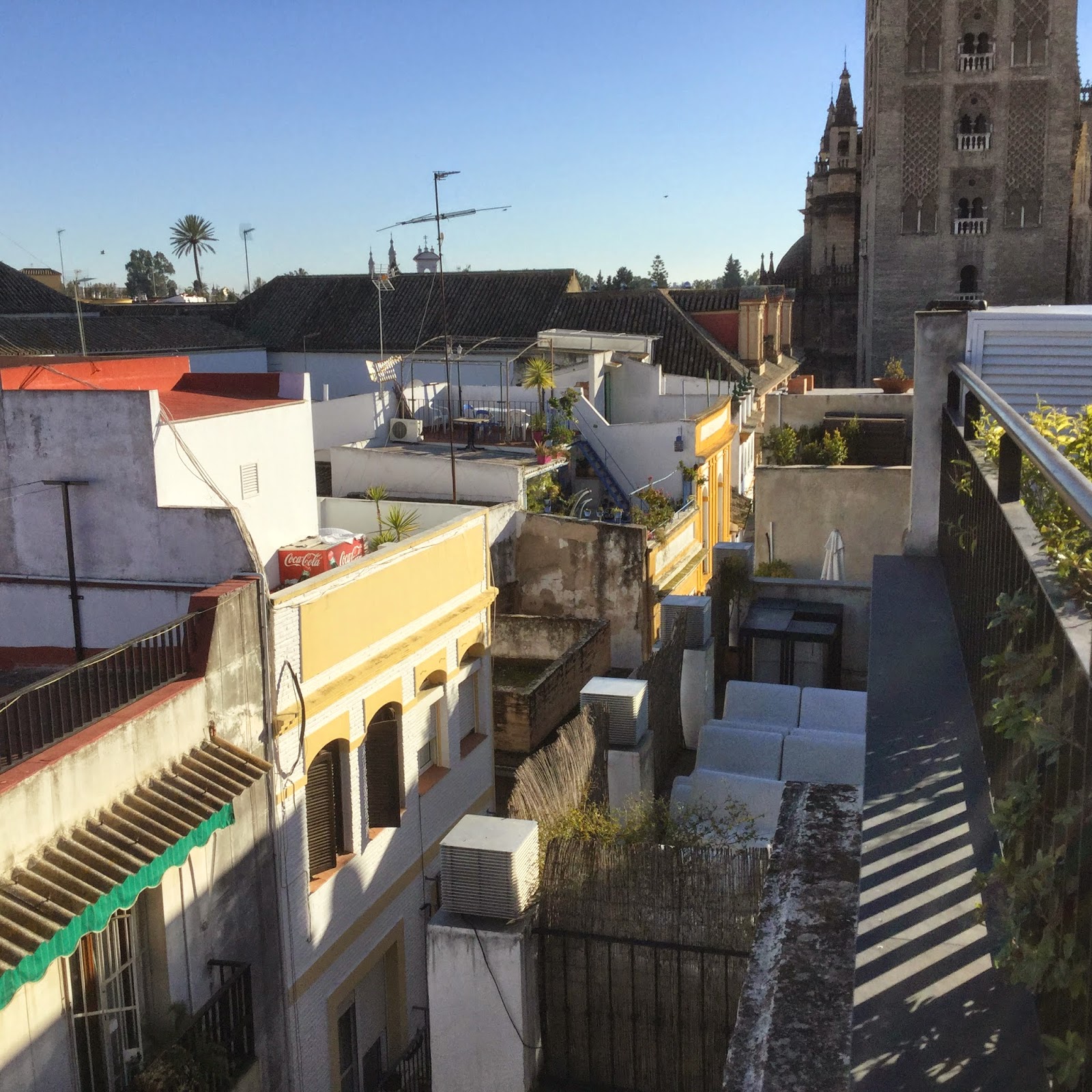
If Granada was a labyrinth, Seville is even more so.  Having studied maps for several months, I managed to weave my way through the streets from the bus station to arrive at my new accommodations for 2 nights.  I did well.  The photos below show the views from the terrace one floor up and of the apartment's interior.  I'm coming back for sure.

view from rooftop terrace of La Giralda bell tower of Seville's Cathedral 2 blocks away
click on photo to enlarge

view from rooftop terrace
click on photo to enlarge

view from rooftop terrace
click on photo to enlarge

view from rooftop terrace
click on photo to enlarge

view from rooftop terrace
click on photo to enlarge

view from rooftop terrace
click on photo to enlarge

view from rooftop terrace
click on photo to enlarge

view from rooftop terrace
click on photo to enlarge

view from rooftop terrace
click on photo to enlarge

click on photo to enlarge

click on photo to enlarge

click on photo to enlarge

click on photo to enlarge

click on photo to enlarge

Day 8: January 1 ... Albayzín

Albayzín is a district of Granada that retains the narrow winding streets of its Medieval Moorish past. It was declared a world heritage site in 1984, along with the famous Alhambra.

It rises on a hill facing the Alhambra and many tourists journey into Albayzin for the spectactular views of the Alhambra from the viewing point by the church of San Nicolas.

Highlights within the area include the remains of an Arab bath complex, Granada's archeological museum, and the church of San Salvador, built on the remains of a Moorish mosque. Albayzin also contains some original Moorish houses and a wide range of restaurants, including several streets whose eateries are inspired by North Africa.

The oldest part of the medina (city in Arabic) dates to the 11th century.

view of  Albayzín taken from the Alhambra
click on photo to enlarge
view of Albayzín taken from the Alhambra
click on photo to enlarge


click on photo to enlarge
Mario Maya, one Spain's most innovative and influential flamenco dancers
click on photo to enlarge
view of the Alhambra from church of San Nicola
click on photo to enlarge
view of the the Alhambra at sunset from church of San Nicolas
click on photo to enlarge
view of the the Alhambra at sunset from church of San Nicolas
click on photo to enlarge
view of the the Alhambra at sunset from church of San Nicolas
click on photo to enlarge
view of the the Alhambra at sunset from church of San Nicolas
click on photo to enlarge
view of the the Alhambra at sunset from church of San Nicolas
click on photo to enlarge
view of the the Alhambra at sunset from church of San Nicolas
click on photo to enlarge


Days 6-8: December 30 / January 1... the streets of Granada

I'm woefully behind schedule in keeping this blog up to date, but I'll add more details later.

What we found so fascinating about Granada is that it is city of very diverse neighbourhoods, each with their own history, architecture and street life.


a labyrinth of narrow streets and alleyways
click on photo to enlarge

a labyrinth of narrow streets and alleyways
click on photo to enlarge

orange trees everywhere
click on photo to enlarge

click on photo to enlarge

click on photo to enlarge

a view in the distance of the steeple of our hotel (formerly a monastery)
click on photo to enlarge


click on photo to enlarge

click on photo to enlarge

click on photo to enlarge

click on photo to enlarge

click on photo to enlarge

click on photo to enlarge

click on photo to enlarge

click on photo to enlarge